



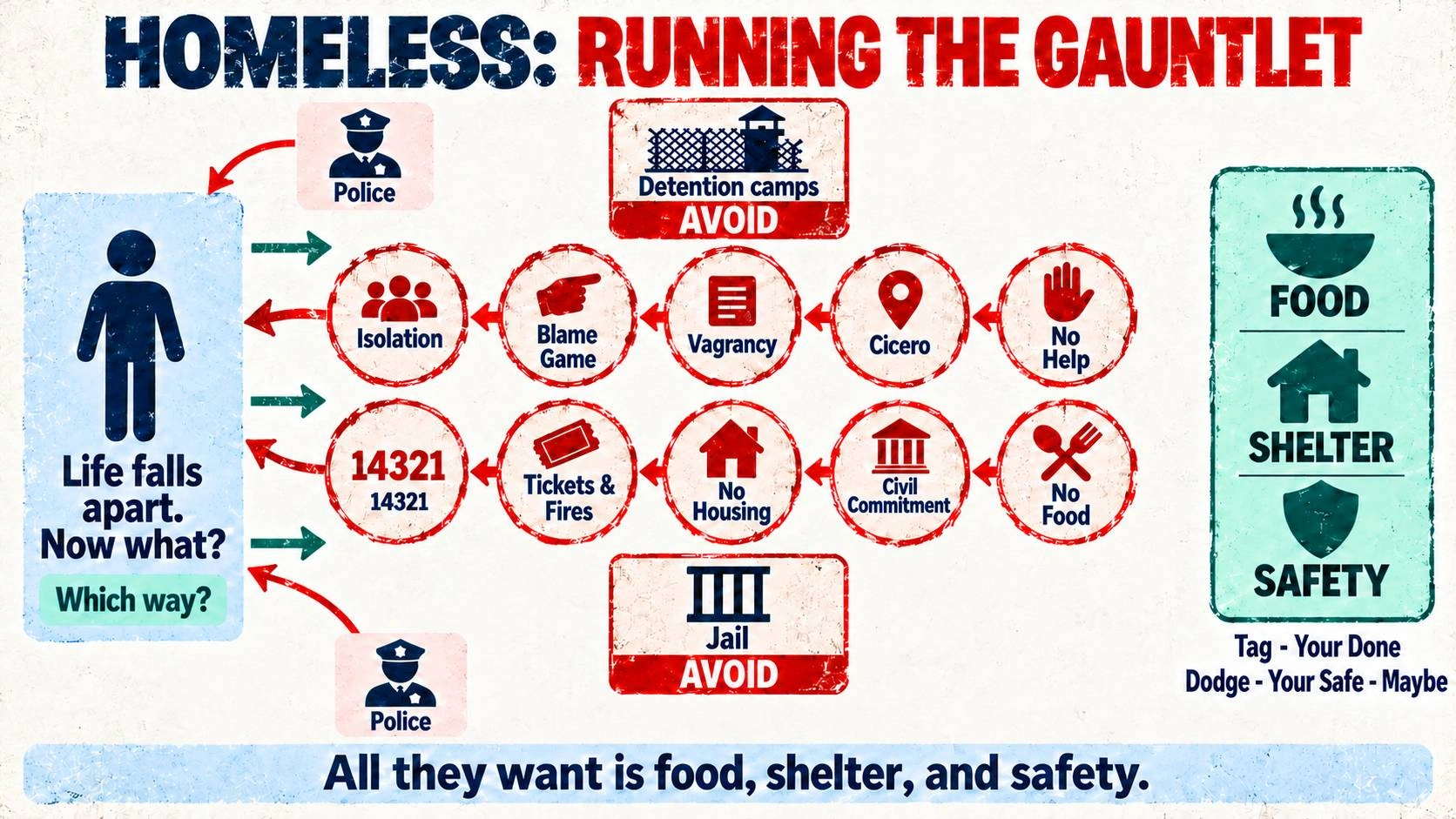
The Deck is Being Stacked to Bury the Homeless

Luke 12: 2 to 3
Nothing is covered up that will not be revealed, or hidden that will not be known. 3 Therefore whatever you have said in the dark shall be heard in the light, and what you have whispered in private rooms shall be proclaimed on the housetops.
Homelessness is a tragedy, not a crime
When poverty becomes suspicious, compassion is in trouble
Losing a home should never mean losing your humanity
Introduction
The team at WillUCMe is introducing a special four-part blog series designed to bring to light a critical shift in the narrative regarding homelessness and how homeless individuals should be cared for and treated during the current crisis. In this first blog, we are going to introduce the Executive Order, the Cicero Institute, and a proposed bill in Louisiana—an anti-homeless push that many believe is dangerous. You will hear words such as force, involuntary, public order, and institutionalization. The repeated use of such language is an attempt to lead the public down a particular path of agreement and acceptance.
Our goal is simple: we need to cut through the narrative and expose the agenda being presented to the general population regarding homelessness. If the narrative is not challenged, it will eventually be accepted, and that cannot happen. The homeless are human beings. They have souls. They are important to the Lord. We have a moral duty to care for them. If we choose to do nothing, let that be the baseline—not shoving people into institutions and stripping them of their rights and liberties.
We must choose to change the narrative from one of blame and punishment, where homeless individuals are forced either to hide or face confinement, to one of compassion and structured reintroduction into a stable life. Especially for those among us who claim to be Kingdom people, we can no longer afford to sit idly on the sidelines while these changes unfold around us.

THE MAGIC TRICK INTRODUCED
Conflate:
To blend two or more concepts into one.
To mistakenly treat two different things as though they are the same.
Follow closely: Civil Commitment is now being mixed with Anti-Vagrancy measures, and the two are increasingly being treated as though they are one and the same.
Review: Civil Commitment is a difficult process by design. There are six basic steps that must be followed, and there is a reason for that. The individual being considered for commitment must be protected before a final decision is made that could strip them of certain liberties. The process includes assessment, affidavits, legal counsel, judicial involvement, and a final determination. Safeguards exist because the stakes are extremely high.
The Twisting: The language found within the Executive Order aggressively conflates mental health interventions with anti-vagrancy actions. The Order cannot legally redefine the terms surrounding Civil Commitment, but it functionally shifts the meaning by treating involuntary institutionalization as both necessary and desirable for maintaining public order. Furthermore, there are instructions directing the Attorney General and HHS departments to seek either a reduction of, or complete challenges to, protections established through the Olmstead decision and other safeguards intended to protect individuals with disabilities.
Wrap-Up: We continue to hear a strong narrative that homelessness is out of control, dangerous, and primarily driven by mental illness and addiction. But are we hearing the full truth? News is no longer simply the reporting of events; increasingly, it is the careful construction of storylines designed to move the public into alignment with a specific agenda.
Civil Commitment has a place in society and serves an important purpose when used correctly. However, it was never intended to become a tool within anti-vagrancy campaigns. While the legal definitions may not be changing, the practical application appears to be shifting in ways that should concern all of us. From the strict standard of imminent danger to self or others, we are now seeing movement toward a standard that equates homelessness and an inability to provide for oneself with grounds for intervention.
Reality Check: What we are effectively saying to the homeless is this: We cannot or will not build enough affordable housing. We cannot or will not create enough shelter beds. We cannot or will not address the root causes that brought you here. Instead, we will lock you away.
You have been hungry and without resources, and now your inability to survive in a broken system may be interpreted as proof that you cannot care for yourself. You have slept wherever you could find a small measure of safety, but now that very act may be used against you. Your freedom of movement, your right to make personal decisions regarding treatment, and potentially even aspects of your privacy and civil liberties may be placed in jeopardy.
This is the fight that stands before us today.

WHITE HOUSE EXECUTIVE ORDER 14321
White House Executive Order 14321, titled “Ending Crime and Disorder,” was issued shortly after our current President took office. While the title appears straightforward, it does not fully reveal the heart of the Order or the direction in which it seeks to move homelessness policy. If one chooses to read the Order rather than simply accept the narrative surrounding it, a much darker purpose begins to emerge.
The Five Key Components:
Ending Housing First:
Housing First has historically been viewed as a best-practice model for addressing homelessness. The principle is simple: provide stable housing first, then address the challenges that contributed to homelessness. Under the current shift in policy, that approach is being diminished in favor of other interventions.
Increasing Criminalization:
The Order promotes greater enforcement of what are commonly referred to as “Quality of Life” offenses. These are generally low-level crimes and infractions that disproportionately impact homeless individuals. While drug-related offenses are included, the broader effect is an increase in law enforcement contact for those already struggling to survive.
Civil Commitment:
The Order seeks maximum flexibility in the interpretation and application of Civil Commitment laws. In practical terms, this means expanding the circumstances under which individuals may be compelled into treatment facilities against their will.
Institutions:
Rather than emphasizing shelters, supportive housing, outpatient treatment, and community-based care, the focus increasingly shifts toward institutional settings for those suffering from mental illness or addiction.
Camping:
The Order supports some of the strictest anti-camping measures seen in recent years. This creates a troubling dilemma. If there are insufficient shelter beds, inadequate affordable housing, and limited support services, where exactly are people supposed to go? If camping is prohibited and housing is unavailable, who bears responsibility for that failure?
The underlying theme becomes clear: options continue to disappear until only one remains. Housing is diminished. Shelters are insufficient. Public spaces are prohibited. Eventually, the only remaining option becomes forced institutional care, regardless of how an individual became homeless in the first place.
The concern is not simply about policy. It is about the direction in which these policies are leading. When every pathway except confinement is gradually closed, can we honestly call that a choice?

INTRODUCING THE CICERO INSTITUTE
The Cicero Institute is a powerful and influential policy organization that has increasingly shaped discussions and legislation regarding homelessness across the nation. While many Americans have never heard its name, its influence can be found in policy proposals appearing in cities and states throughout the country.
The Institute’s stated goal is to end street camping. On the surface, that may sound reasonable. Few people would argue that living on a sidewalk, beneath a bridge, or in a makeshift encampment represents an acceptable long-term solution. The problem is not identifying the issue. The problem is determining what comes next.
Beyond ending street camping, the Institute offers limited long-term solutions regarding housing stability and supportive services. One proposal involves sanctioned camps with minimal services for extended periods of time. Yet an obvious question remains unanswered: What happens when those months are over? What is the next step for the person who still lacks housing, income, family support, or medical care?
The Cicero Institute has been one of the leading voices behind the movement away from Housing First models and toward mandatory interventions. It strongly advocates for forced treatment in cases involving severe mental illness and addiction. While treatment certainly has an important role to play, a critical question remains: Who determines what constitutes severe mental illness? What standards will be used? And how broadly will those definitions eventually be applied?
The Institute has also supported policies allowing citizens to sue local governments over unresolved homelessness issues. While this may appeal to communities frustrated by visible homelessness, it creates additional pressure on local governments to prioritize removal rather than meaningful solutions.
Consider this carefully: Does homelessness automatically mean a person is severely mentally ill?
For decades, Americans have understood that homelessness can result from countless factors: economic hardship, family breakdown, domestic violence, aging out of foster care, disability, medical debt, loss of employment, natural disasters, addiction, mental illness, or simply a series of unfortunate circumstances. Yet current narratives increasingly seek to reduce all homelessness to a mental health crisis requiring intervention.
The concern is that homelessness itself is slowly becoming viewed as evidence of incapacity.
The Cicero Institute has been instrumental in advancing policies designed to remove homelessness from public view. Unfortunately, many critics argue that these efforts are not primarily focused on helping homeless individuals rebuild their lives. Instead, the objective appears to be making homelessness less visible to the housed population.
Removing people from sight is not the same as helping them.
Making a problem less visible does not mean it has been solved.
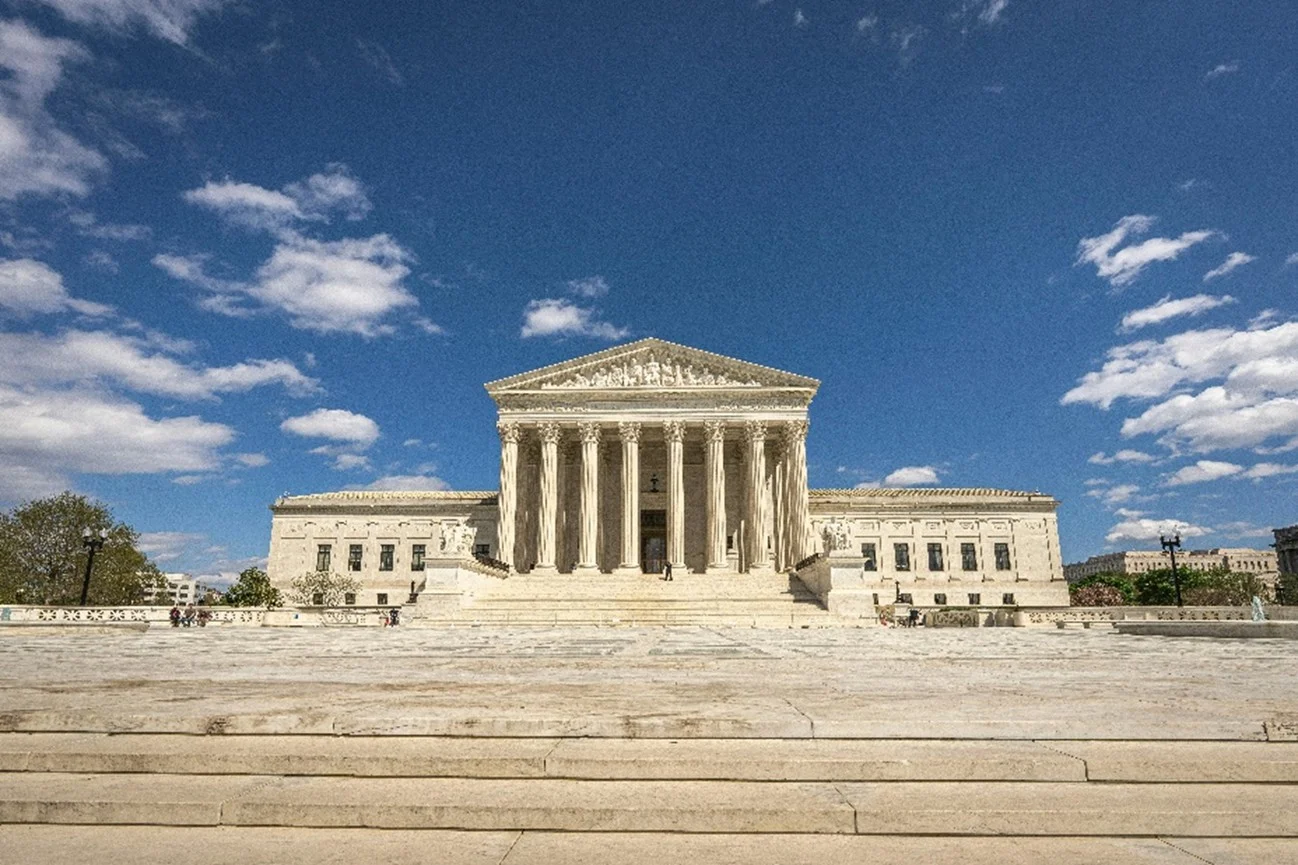
GRANTS PASS VERSUS JOHNSON
This legal case began as an effort by advocates and attorneys seeking relief for homeless individuals who found themselves trapped in an endless cycle of citations, fines, warrants, and incarceration. When a person becomes homeless, even minor violations can quickly accumulate, creating barriers that make recovery increasingly difficult.
The constitutional question at the center of the case involved the Eighth Amendment and the prohibition against cruel and unusual punishment. The argument was straightforward: Can a community punish someone for sleeping outside when there is no available shelter for them to use?
As with all cases that reach the Supreme Court, the issue moved through the lower courts before eventually receiving national attention. The resulting decision significantly altered the legal landscape regarding how cities may regulate camping and homelessness.
The latest development is particularly interesting. An appellate court judge has begun challenging aspects of the legal framework established by the ruling—an uncommon and noteworthy occurrence. The challenge focuses on constitutional concerns, including Eighth Amendment protections and the broader implications of criminalizing homelessness when adequate alternatives are unavailable.
The legal battle is ongoing, and its outcome remains uncertain. However, it raises important questions. If portions of the current interpretation are revisited or overturned, could that slow or halt the growing movement toward aggressive enforcement and expanded Civil Commitment practices? Could it restore legal protections that many believe have been weakened?
Only time will tell.
What is certain is that every interaction with the criminal justice system makes recovery more difficult. A citation becomes a warrant. A warrant becomes an arrest. An arrest becomes a criminal record. Each additional barrier makes it harder to secure employment, housing, transportation, and stability.
The legal system that was created to protect all citizens—regardless of wealth, status, or position—appears increasingly willing to tell some of the most vulnerable among us that they have no protection if they happen to be homeless.
Yes, this is a simplified summary of a very complex legal case. Entire books could be written on the subject. Yet the practical reality remains unchanged.
The more frequently homeless individuals are pushed into jails and courtrooms, the more difficult their recovery becomes.
As I often say, imagine your grandmother, your uncle, a disabled veteran, or a young adult aging out of foster care being placed in jail simply because they had nowhere else to go. Imagine them being housed alongside hardened criminals, not because they committed a violent offense, but because they lacked a bed.
That reality should give us all pause.
LOUISIANA HB 211
This is one of the newest legislative attempts to address homelessness, and it should cause all of us to stop, pay attention, and ask some difficult questions. Louisiana HB 211 proposes using Civil Commitment laws in ways that many believe stretch far beyond their original purpose. In fact, this bill is what initially started me down the road that ultimately led to this four-part blog series examining the increasingly dark path being laid before the homeless population.
The central concern is simple: if homelessness itself begins to serve as evidence that someone is unable to care for themselves, then Civil Commitment laws may become a tool for removing homeless individuals from society regardless of whether they meet traditional standards for involuntary treatment.
That should concern every American.
Civil Commitment laws were created to protect both individuals and society when severe mental illness creates an immediate danger to oneself or others. They were never intended to become a broad mechanism for addressing poverty, housing shortages, economic hardship, or social failures.
But the concerns surrounding HB 211 do not stop there.
Under the proposal, homeless individuals who are compelled into treatment could become responsible for the costs associated with that treatment. If they are unable to pay, provisions within the framework raise troubling questions regarding labor requirements and repayment mechanisms.
Think carefully about what that means.
A person who did not request treatment, did not voluntarily enter treatment, and may not have committed a crime could potentially find themselves obligated to work to satisfy costs imposed upon them. The implications raise serious constitutional, ethical, and moral concerns.
The Thirteenth Amendment was established to protect Americans from involuntary servitude. While supporters of these measures may argue that such provisions serve legitimate governmental interests, critics are asking whether the spirit of those constitutional protections is being undermined.
At the very least, these questions deserve open and honest debate.
This represents one of the darkest turns in homelessness policy that we have witnessed in decades. If homelessness itself becomes justification for confinement, forced treatment, and compelled labor, then we are entering territory that should alarm citizens regardless of political affiliation.
This issue is not about Democrats or Republicans.
It is about preserving the humanity, dignity, and rights of individuals who are already among the most vulnerable members of society.
No matter a person’s age, race, background, or circumstances, homelessness should never result in the loss of their personhood.

THE “WHY” OF THE IMPORTANCE OF KNOWING THESE THINGS
This is only the first of four blogs in this series, and perhaps the most important question to answer is “Why?”
Why should the average American care about Executive Orders, Civil Commitment laws, court cases, policy organizations, or legislation affecting people they may never meet?
The answer is simple.
Because we are witnessing the continued growth of a homeless population that is becoming older, more diverse, and more vulnerable with each passing year. More veterans. More senior citizens. More working families. More individuals living one emergency away from losing everything.
And we are being told a story that often does not match reality.
There are efforts underway to reshape public perception regarding homelessness. Many of these changes are happening quietly, behind policy papers, legislative language, and carefully crafted public messaging. Most people never read the documents. Most never attend the meetings. Most never realize what is changing until the changes are already in place.
That is why understanding these issues matters.
Truth requires examination. It requires asking questions. It requires looking beyond headlines and talking points.
As I have heard many times within my church, every lie has an expiration date. The expiration date arrives when truth finally appears.
This series is an attempt to bring some of that truth into the open.
Whether you ultimately agree with every conclusion presented here is less important than your willingness to examine the facts for yourself.
The future of hundreds of thousands of homeless Americans may depend upon whether people are willing to pay attention before these policies become fully entrenched.

OF COLLABORATION BEHIND CLOSED DOORS
These developments are not occurring in a vacuum.
Nor are they isolated incidents appearing independently across the country.
For years, cities and states have been revising vagrancy laws, camping ordinances, enforcement policies, and homelessness strategies. Throughout that process, organizations such as the Cicero Institute have played an increasingly influential role in shaping both legislation and public policy.
At the same time, substantial amounts of federal funding are involved through programs connected to what is known as the Continuum of Care model.
For those unfamiliar with the term, the Continuum of Care serves as a framework for distributing federal funds, grants, programs, and resources related to homelessness. It also establishes benchmarks and measurements used to evaluate homelessness initiatives across the nation.
Where funding goes, policy often follows.
That is why these developments matter.
If priorities shift from housing and supportive services toward enforcement and institutionalization, funding can shift as well. Expensive housing programs may become less attractive than lower-cost alternatives focused on containment, removal, or forced treatment.
The financial incentives should not be ignored.
Bills such as Louisiana HB 211 do not simply appear overnight. Executive Orders do not materialize from thin air. Policy recommendations do not become national talking points by accident.
These proposals are researched, drafted, revised, discussed, and refined long before they ever become visible to the public.
There is a reason for that process.
The less attention these proposals receive during development, the easier they are to implement later.
Most Americans never read legislative language. Most never review policy recommendations. Most never examine the details hidden behind reassuring titles and carefully crafted summaries.
That reality allows significant power to remain hidden beneath seemingly harmless language.
Consider these two statements:
“Fellow Americans, we have determined that the best way to address homelessness is through widespread involuntary institutionalization and mandatory treatment.”
Or:
“Fellow Americans, we are introducing a new initiative to end crime and disorder on our streets while helping the homeless.”
Both statements may ultimately lead to similar outcomes.
Yet one sounds considerably more acceptable than the other.
Language matters.
Titles matter.
Narratives matter.
That is precisely why we must learn to look beyond them.

CREATING A NEW CLASS OF PERSONHOOD IN THE UNITED STATES
What we are witnessing is not random.
Nor is it merely the result of isolated policy decisions.
Taken together, these developments create a troubling picture—one in which homelessness itself increasingly becomes grounds for diminished rights, reduced protections, and expanded government control.
Whether the individual is an eighteen-year-old aging out of foster care, an injured worker in their twenties, a disabled veteran, or a grandmother in her sixties, the message appears increasingly similar:
You have become disposable.
That should never be acceptable in a nation founded upon liberty and individual rights.
America has confronted difficult questions of personhood before. Throughout our history, entire groups of people have had to fight for recognition, dignity, and equal protection under the law. Those battles were painful, costly, and often took generations to resolve.
We should not be eager to create new categories of people whose rights become conditional upon their economic status or living arrangements.
No, homelessness and slavery are not identical experiences. They should never be presented as such.
However, they do share one deeply troubling characteristic.
Both involve the erosion of personal autonomy and the gradual removal of freedom, dignity, and self-determination.
That is the warning being raised here.
If homelessness becomes sufficient justification for removing civil liberties, compelling treatment, restricting movement, and expanding confinement, then we are moving in a dangerous direction.
We are already witnessing the use of tickets, fines, citations, and enforcement actions that create pathways into increasingly prolonged involvement with government systems.
We are seeing assumptions regarding mental illness and addiction applied broadly across an entire population.
We are witnessing growing efforts to redefine homelessness itself as evidence of incapacity.
No matter how these developments are framed, there remains a troubling reality beneath the surface.
There is rot at the core.
This is not the America envisioned by our Founding Fathers, nor is it consistent with the values that many people of faith believe God intended for humanity.
Before we continue down this path, we need to slow down, examine what is happening, and ask whether we are sacrificing fundamental principles in pursuit of convenient solutions.

CLOSING WORDS
In this introductory blog, our goal has been to bring into the light issues that have been developing in the shadows for several years. By no means have we been able to explore every detail or every implication of the topics discussed here. Entire books could be written on the Executive Order, Civil Commitment laws, the Cicero Institute, Grants Pass v. Johnson, and the growing number of legislative efforts appearing throughout the country. Nevertheless, we have opened the door and invited you into a conversation that desperately needs to take place.
The Executive Order, Louisiana HB 211, and similar policy initiatives have the potential to become some of the most impactful—and potentially harmful—changes affecting homeless individuals in modern American history. If these efforts continue to expand unchecked, they may permanently alter the landscape of homelessness in America and fundamentally change how society views those who find themselves living on the streets.
The Cicero Institute has spent years influencing homelessness policy across the nation. While many Americans have never heard its name, its fingerprints can increasingly be found on legislation, policy recommendations, and enforcement strategies appearing from coast to coast. Like any deep infection hidden beneath the skin, eventually it rises to the surface where it can no longer remain concealed. That is where we find ourselves today. The conversation can no longer remain hidden behind policy papers and closed-door meetings. It must be brought into the public square where it can be openly examined and honestly debated.
As we review these documents, Executive Orders, policy recommendations, and legislative proposals, a troubling pattern begins to emerge. There appears to be a growing effort to redefine homelessness itself—not as a housing crisis, an economic crisis, a family crisis, or even a healthcare crisis—but as a condition requiring increasing levels of intervention, control, supervision, confinement, and treatment.
The danger is not found in helping people.
The danger is found in deciding that helping people requires taking away their ability to make decisions for themselves.
The danger is found in convincing society that removing liberty is somehow an act of compassion.
The danger is found in creating a narrative where homelessness itself becomes evidence that a person is incapable of directing their own life.
History has repeatedly shown us that societies often begin their darkest chapters by first redefining certain groups of people. The language changes. The labels change. The standards change. Eventually, rights that once seemed untouchable begin to erode.
That is why vigilance matters.
That is why asking questions matters.
That is why refusing to simply accept a narrative matters.
At the heart of this discussion is a simple truth: homeless individuals are human beings. They are fathers and mothers, sons and daughters, veterans and grandparents, workers and students, people who have stumbled, people who have suffered, and people who have been failed by systems that promised to help them.
They are not problems to be managed.
They are not nuisances to be hidden.
They are not obstacles standing in the way of economic development or public convenience.
They are people.
And if we lose sight of that truth, we risk losing something far greater than a policy debate. We risk losing part of our own humanity.
As Kingdom people, we should understand this better than anyone. Throughout Scripture, God repeatedly identifies Himself with the poor, the vulnerable, the widow, the orphan, the stranger, and those who have been cast aside. The measure of a society has never been how it treats its strongest members. The measure has always been found in how it treats those with the least power to defend themselves.
The homeless deserve solutions.
They deserve compassion.
They deserve accountability when appropriate.
They deserve opportunities for restoration.
What they do not deserve is to have their personhood diminished in order to make difficult social problems easier to manage.
The path before us is not an easy one. Yet difficult problems have never been solved by abandoning our principles. They are solved by holding firmly to them.

INVITATION TO OUR NEXT INSTALLMENT
This first blog has focused primarily on the policy landscape and the growing movement toward enforcement, institutionalization, and expanded Civil Commitment measures. However, before we can properly evaluate proposed solutions, we must first understand the problem itself.
That brings us to our next installment.
In the second blog of this series, we will begin examining the forces driving homelessness across America. Some of what we discuss may be uncomfortable because it challenges many of the assumptions that have become widely accepted. The reality is that homelessness is rarely the result of a single factor. Instead, it is often the culmination of multiple failures occurring simultaneously—economic failures, housing failures, healthcare failures, family breakdown, addiction, trauma, aging populations, inflation, and public policy decisions.
For too long, the blame has been directed almost exclusively toward the individual experiencing homelessness. While personal responsibility certainly plays a role in many situations, it is neither the only factor nor always the primary factor.
What happens when housing costs rise faster than wages?
What happens when a senior citizen’s fixed income can no longer cover rent?
What happens when a foster child ages out of the system with nowhere to go?
What happens when an injury, illness, or job loss wipes out years of stability?
What happens when affordable housing disappears from entire communities?
What happens when support systems fail?
These are questions that deserve honest answers.
As we move into the next blog, we will begin taking apart the puzzle piece by piece. Some of those pieces have been placed incorrectly for years. Others have been deliberately ignored. Still others have been hidden from public view altogether.
Only when we separate the pieces and examine them honestly can we begin to understand the full picture.
The blame game has always been easy.
Understanding the truth is harder.
But truth is where real solutions begin.
We invite you to join us for the next installment as we continue pulling back the curtain on one of the most important and misunderstood issues facing our nation today.