



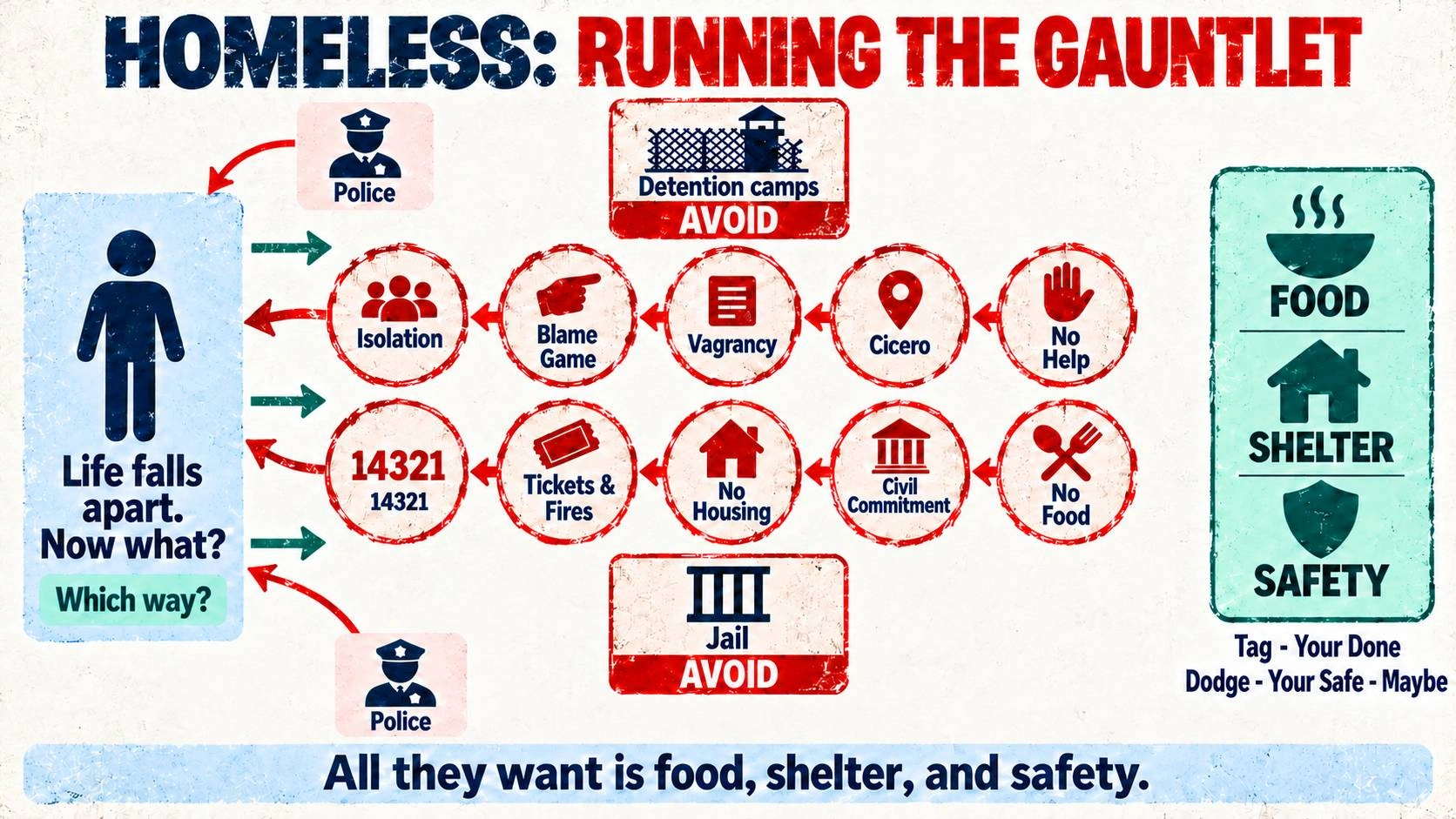
This is a Look at the Root Cause of the Crisis

Luke 12: 2 to 3
Nothing is covered up that will not be revealed, or hidden that will not be known. 3 Therefore whatever you have said in the dark shall be heard in the light, and what you have whispered in private rooms shall be proclaimed on the housetops.
Homelessness is a tragedy, not a crime
When poverty becomes suspicious, compassion is in trouble
Losing a home should never mean losing your humanity

Welcome Back: Let’s Reconnect
There are pillars in every generation, community, business, and government that hold society together and allow it to function at its highest level. When those pillars are broken, removed, or ignored—whether accidentally or intentionally—the surrounding communities are impacted, and the ripple effects can be far-reaching.
In our previous blog, we examined some of the bad actors who are directly involved in the homeless community yet do not have the best interests of the homeless at heart. Between the influence of the Cicero Institute and the recent White House Executive Order, the balance has shifted, and we are in trouble. Why are we in trouble? Because a nation can only be as great as the way it treats its most vulnerable citizens.
Today, we will explore some of the known and lesser-known causes of homelessness. The roots of homelessness are not simply black and white. They are deep, complex, and often difficult to uncover, which is why governments and organizations have spent millions addressing symptoms while avoiding deeper causes. Some readers may disagree with that statement, but as I have said before, truth must be spoken if freedom is ever to follow. The blame game thrives in misinformation and cover-ups, and it must end before more people die sleeping on our streets.
Introduction
Homelessness has become one of the most discussed social issues in America, yet it remains one of the least understood. Too often, the conversation is reduced to simple explanations and convenient talking points that place blame solely on those living on the streets. The reality is far more complex. Behind every homeless individual is a story, and behind every story is often a series of circumstances that gradually led them to a place they never expected to be.
In recent years, a narrative has emerged that portrays homelessness as primarily a result of poor choices, addiction, mental illness, or unwillingness to contribute to society. While those factors may play a role in some situations, they do not explain the thousands of seniors, veterans, working families, survivors of domestic violence, and middle-class Americans who are now struggling to keep a roof over their heads. Nor do they explain why homelessness continues to rise despite billions of dollars being spent to address it.
In this blog, we will take a closer look at several of the underlying causes that continue to drive homelessness across the nation. From housing affordability and disappearing jobs to food insecurity, interpersonal violence, and the failure to utilize existing resources, these issues reveal a much larger picture than many are willing to acknowledge. If we are ever going to find meaningful solutions, we must first be willing to understand the problem honestly, beyond the headlines, political narratives, and carefully crafted sound bites.
Housing Unaffordability
Many people forget that it is not just the initial sticker shock of housing prices that drives the affordability crisis in America. There are fees, insurance costs, assessments, taxes, and countless other expenses that often make the purchase price the least painful part of the equation. Since the Pandemic, much of the discussion has focused on individuals and how they supposedly mishandled their finances, while far less attention has been given to the owners, operators, lenders, and systems that allowed the crisis to grow into what it is today.
There is a reason I continually return to numbers. We are wired to understand numbers. Ten pennies make a dime. Twenty dimes make two dollars. Numbers are concrete, measurable, and far more difficult to manipulate than narratives. They help reveal when something is out of balance.
For one- and two-bedroom apartments, average rental rates have surged. One-bedroom units increased from approximately $1,510 to $1,587, while two-bedroom units climbed from roughly $1,680 to $1,819. That represents increases ranging from 12% to 15% since the Pandemic. At the same time, mortgage payments across the nation have nearly doubled. Insurance premiums have increased by 40% to 50%, and homeowner and condominium association fees have risen dramatically as well.
Here is perhaps the most alarming statistic: a minimum-wage worker would need to work approximately 106 hours per week just to afford housing costs in many parts of the country.
Working 106 hours per week is impossible for most people. Even in a household with two wage earners, that still requires each person to work 53 hours per week simply to keep a roof overhead. This is where a significant portion of the new homeless population is coming from—directly from leases, rental contracts, and mortgages. They cannot find housing that fits within their budget no matter how hard they work. They are now commonly referred to as the “housing poor.”
And these are the people some would have us believe should be forced into treatment facilities?
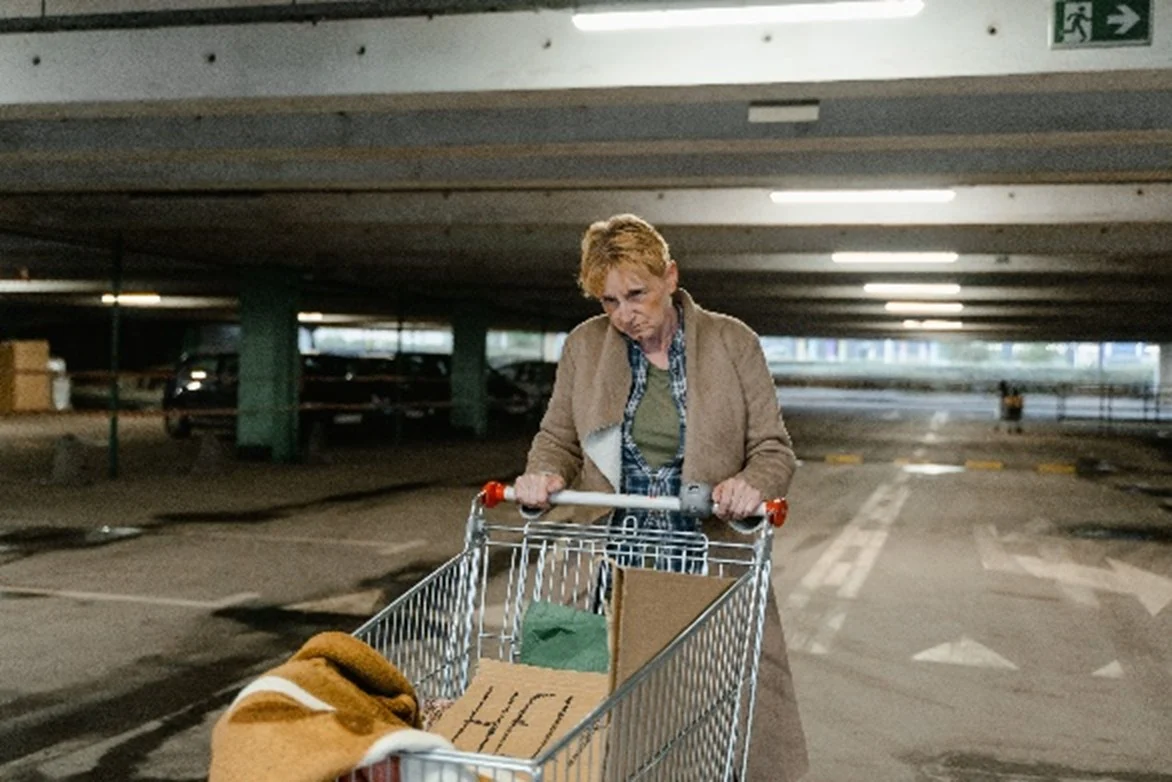
Seniors Squeezed Out of Housing
The aftermath of the 2008 housing bubble and the lingering effects of the Pandemic have pulled the rug out from under many senior citizens. National statistics generally define seniors as beginning at age 55. For many, annual Cost of Living Adjustments never keep pace with the real increases in daily expenses.
Imagine working your entire life, planning carefully for retirement, and then discovering at age sixty that everything has changed. Housing costs increase, medications become more expensive, transportation costs rise, and inflation steadily chips away at purchasing power. Suddenly, the streets become a very real possibility.
I know a couple well—let’s call them Bob and May. They were forced to leave their home and move to another state simply to make their Social Security benefits stretch far enough to cover basic living expenses. They had already been hit hard by the 2008 housing crisis, and the combined burden of HOA fees, assessments, and inflation nearly cost them everything.
Their move was not a choice. It was a necessity.
Fortunately, Bob and May had one safety net that could not be taken away: family. But how many seniors do not have that safety net? Homelessness is rarely a choice. More often, it is the end result of multiple hardships converging at the same time.
Retirement today comes with medical expenses, prescription costs, specialized diets, transportation needs, and countless other financial pressures. Yet we still hear claims that senior homelessness is somehow the result of poor choices.
Assisted living facilities and nursing homes are expensive, difficult to access, and not always ideal places to spend the final chapters of life. Until we address those realities honestly, we cannot have a serious conversation about homelessness among seniors.
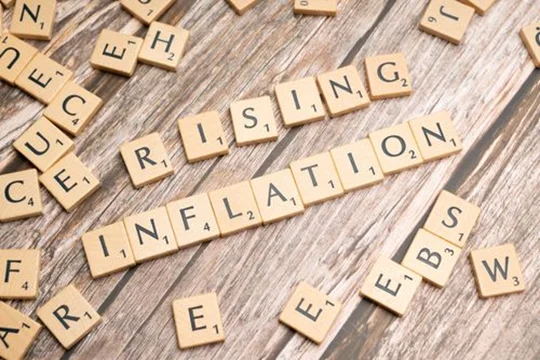
Inflation: The Hidden Pathway to Homelessness
When people discuss the root causes of homelessness, certain topics almost always dominate the conversation. Mental illness, addiction, lack of affordable housing, and unemployment are often brought to the forefront. Yet there is another cause quietly working in the background, one that receives far less attention than it deserves: inflation.
Inflation is sneaky. It does not announce itself with a dramatic event or sudden catastrophe. Instead, it works slowly and steadily, eating away at a family’s ability to survive. Most people do not wake up one morning and realize they are in financial trouble. It happens over time. A few extra dollars at the grocery store. A higher utility bill. More money spent at the gas pump. Increased medical expenses. Rising insurance premiums. One small increase may not seem significant, but when they all begin stacking together month after month, the result can be devastating.
I once had inflation explained to me in a simple way. Imagine you have a one-dollar bill. Five years ago, that dollar contained ten dimes worth of purchasing power. Today, that same dollar may only contain seven dimes worth. The dollar bill looks exactly the same. It spends exactly the same. Yet it buys considerably less.
That is the reality many Americans are facing today.
For those with healthy savings accounts and comfortable incomes, inflation is frustrating. For those living paycheck to paycheck, it can be life-altering. And for those already living on fixed incomes, it can become catastrophic.
Imagine being retired and living solely on Social Security. Imagine being disabled and dependent upon a fixed monthly payment. Imagine working full-time and still struggling to keep up with rising costs. You have already trimmed your budget. You have cut back on entertainment. You have stopped eating out. You have postponed purchases. You have sacrificed every non-essential expense you can think of.
Yet the numbers still do not work.
Eventually, choices must be made.
Do you buy food or medicine?
Do you pay the electric bill or put gas in the car?
Do you pay the rent or purchase groceries?
These are not hypothetical questions for many Americans. These are real decisions being made every single day.
As inflation continues to erode purchasing power, people begin falling behind. They miss a payment. Then another. Credit cards become lifelines. Savings accounts disappear. Emergency funds are exhausted. What was once a temporary setback becomes a financial crisis.
And for many, the final destination is homelessness.
That reality should cause all of us to pause and think.
Many of the people currently living on the streets did not arrive there overnight. Some lost jobs. Some experienced medical emergencies. Some suffered family breakdowns. Others simply found themselves trapped in an economy where the cost of survival rose faster than their ability to keep up.
Yet despite these realities, we are increasingly witnessing efforts to criminalize homelessness rather than address the causes that create it.
This is one of the reasons the current climate surrounding homelessness is so troubling. Instead of asking why people are becoming homeless, too often we focus on how to make them less visible. Instead of addressing root causes, we address symptoms. Instead of pursuing solutions, we pursue removal.
The narrative being presented suggests that homelessness itself is the problem.
It is not.
Homelessness is often the result of larger problems that have gone unaddressed.
Inflation is one of those problems.
Every month inflation quietly chips away at what little financial margin many families have left. The safety net that once protected people from disaster is shrinking. Savings accounts that once provided security are being drained. Families that once considered themselves stable now find themselves one emergency away from losing everything.
That should concern every one of us.
Because the truth is that many of the people reading this article are far closer to financial hardship than they realize. Most of us are only a few unexpected events away from finding ourselves in circumstances we never imagined.
This is why we must begin thinking critically and compassionately. We cannot simply accept every narrative that is handed to us. We cannot allow ourselves to believe that removing homeless individuals from public view somehow solves homelessness. It does not.
It merely hides the evidence.
The homeless are not the problem. They are often the visible reminder that something within our systems has failed.
As Christians, we are called to see beyond the surface. God expects mercy and compassion. He expects us to care for those who are struggling. Not merely through handouts, but through extending a hand up whenever possible. Through restoration. Through recovery. Through hope.
With inflation continuing to place pressure on families across this nation, many more people may find themselves walking a difficult road in the years ahead.
The question is not whether inflation is affecting people. It clearly is.
The question is how we will respond.
Will we point fingers?
Will we repeat talking points?
Will we blame people for circumstances we do not fully understand?
Or will we extend grace, compassion, and practical help?
Because the reality is simple. It is only by the grace of God that many of us still have a roof over our heads, food on our tables, and hope for tomorrow.
The homeless once had those things too.
Perhaps instead of condemning them for losing them, we should help them find their way back.
Remember the illustration. The dollar that once contained ten dimes now effectively contains seven. That reality is impacting the homeless, those on the verge of homelessness, and many of us who still believe we are safely insulated from financial hardship.
Inflation does not care who you are.
Eventually, it comes for everyone.
The question is whether we will recognize its impact before more people are pushed over the edge.

Interpersonal Violence
This is one of the least discussed causes of homelessness, largely because many people still believe it belongs behind closed doors.
Violence within the home is increasing, and despite decades of effort, our nation still struggles to provide safe, effective pathways for victims to escape dangerous situations and rebuild their lives without fear of retaliation.
In many cases, reporting domestic violence or filing for a restraining order is when a victim faces the highest risk of injury or death. Until this gap between reporting and protection is fixed, homelessness will remain a common outcome for many survivors.
Women and young adults are frequently affected, but men experience abuse and trauma as well.
These are often the very individuals who have been beaten, threatened, manipulated, and traumatized. Yet some now suggest that because they are homeless, they should automatically be viewed as unstable, mentally ill, addicted, or in need of forced treatment.
Really?
Before we judge those experiencing homelessness, perhaps we should first ask whether they are simply trying to stay alive.
Until we create safer pathways out of abusive environments, we are in no position to tell survivors what they must do. Anything less makes us hypocritical.
Job Markets and the Disappearing Blue-Collar Workforce
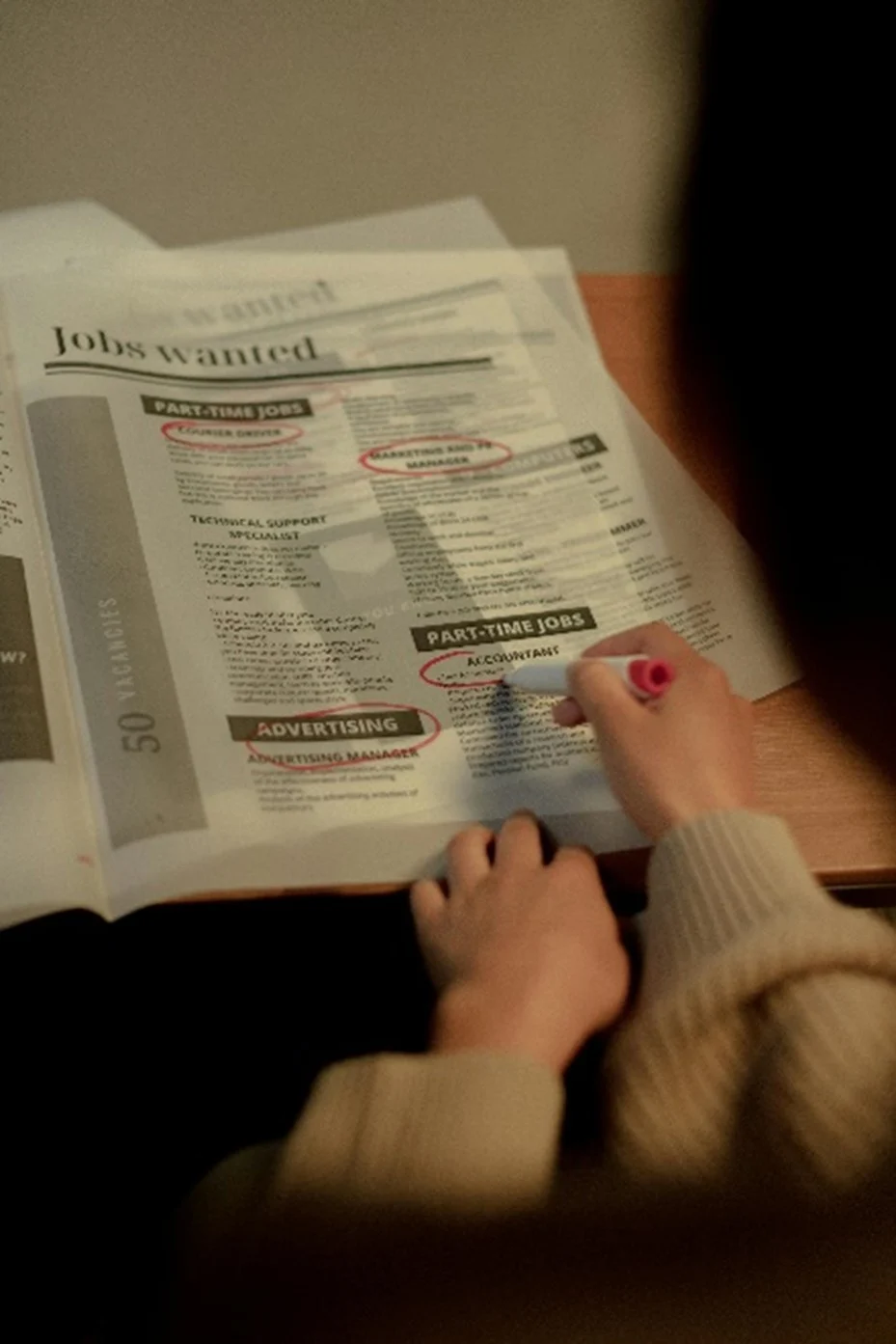
As someone who scans the news rather than consumes it constantly, one thing has become increasingly clear: instability is spreading throughout the middle-class job market.
Restaurants have closed, reduced hours, downsized, or relocated. Every closure represents not only a lost business but also dozens of lost jobs. Similar trends are occurring throughout industries that have traditionally sustained the American middle class.
Many communities are experiencing growing uncertainty.
There is also continuing debate surrounding immigration, labor markets, housing demand, public services, and taxation. Regardless of where one stands politically, these issues have real impacts on local communities, housing availability, and economic stability.
One question that continues to surface is this: Why do we often seem willing to provide resources for some populations while allowing fellow citizens to remain on the streets?
That question is uncomfortable because it requires moral reflection.
Benjamin Franklin once referred to the middle class as the “middling class.” It was the sustaining class—the workers, consumers, builders, and taxpayers who formed the backbone of the nation. Today, increasing numbers of homeless individuals are coming directly from that middle class. They are losing jobs, exhausting savings, and finding themselves unable to recover before housing is lost.
When the middle class weakens, homelessness grows.
American Food Deserts
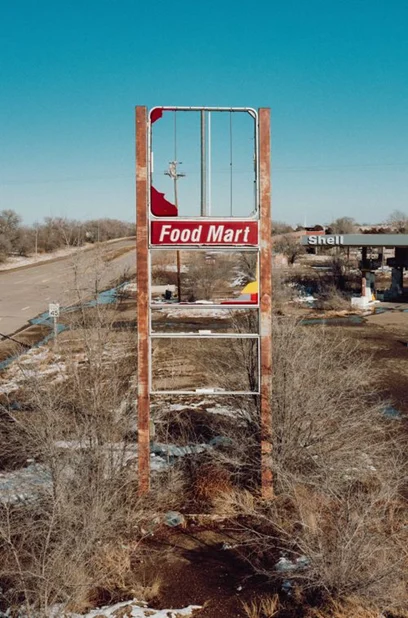
America wastes enormous amounts of food each year. Fear of lawsuits, regulatory burdens, and bureaucratic restrictions often result in usable food being discarded rather than distributed to those in need.
Restaurants, retailers, and producers frequently throw away food that could still help struggling families.
At the same time, food costs continue to rise, and a new phrase has entered our national vocabulary: food deserts.
Children, seniors, and individuals with disabilities are going to bed hungry, yet we continue to blame the homeless for circumstances that are often beyond their control.
Food insecurity is not separate from homelessness. It is one of the pathways that leads directly into it.
The solution begins with common sense. We have the resources to feed people. The challenge is finding the will to do so.

County and State Refusal to Repurpose Closed Buildings
Now we arrive at another uncomfortable truth.
The United States possesses enormous amounts of unused space that could potentially be repurposed to address homelessness and provide access to restorative services.
It requires creative thinking, but creative thinking is what built this nation.
Across America, approximately 20% of office space sits vacant. Millions of square feet of warehouse space remain unused. Defunct hotels, motels, schools, and commercial properties exist in communities throughout the country. Empty parking lots and abandoned facilities are common sights in many cities.
To say we simply do not have the space to address homelessness is difficult to reconcile with these realities.
If government agencies, nonprofits, faith communities, and private organizations worked together, many of these properties could potentially be converted into housing, service centers, training facilities, or transitional living programs.
Would it solve homelessness overnight? No.
Would it be a meaningful step forward? Absolutely.
Yet many of these opportunities remain overlooked, while barriers to conversion remain high and explanations remain scarce.
Connecting Back to the Previous Blog
In our previous blog, we examined some of the actions taking place behind closed doors among those who influence policy, funding, and public perception.
The narrative being built is often one of fear, distrust, and suspicion. It suggests that homelessness itself is evidence of instability, danger, or failure.
This narrative ignores reality.
The causes of homelessness are varied and complex. They include unaffordable housing, economic instability, domestic violence, food insecurity, medical challenges, and a host of other factors.
Yet rather than addressing those causes, many proposals focus primarily on removing homeless individuals from public view.
No affordable housing. No shelter expansion. No meaningful prevention efforts. No serious discussion about why people became homeless in the first place.
The result is a pathway that leads to fewer solutions rather than more.

Let’s Close With This
From unaffordable housing to interpersonal violence, the causes of homelessness are as varied as the trees in a forest. Yet many continue to demand a single solution for a deeply complex problem.
Seniors, teenagers, veterans, working families, and survivors of abuse are all struggling. Food deserts exist. Housing costs continue to climb. Jobs disappear. Yet many still insist that homelessness is simply the result of personal failure.
That narrative does not hold up under scrutiny.
We feed those in jails. We fund nursing homes. We provide resources to countless programs and populations. Yet many people standing on the edge of homelessness find little help before they fall.
Why?
That is a question worth asking.
The purpose of this installment is not to excuse homelessness. It is to encourage people to look beyond the narratives presented on television screens and social media feeds. Too often, fear is used to shape public opinion. The public is overwhelmed with simplified explanations until complex human realities disappear.
The truth is that homelessness is rarely simple.
And if we truly want solutions, we must first be willing to understand the causes.